What we allow to fill our lives is what we dispense to others. What’s in Your Cistern?
When our Generations team from Carmel Baptist Church traveled to Israel this past May, I became quite interested in the hydrology of southern Israel during our second day of the trip. As explored the southern desert region, a critical question came to mind. How did people survive in a land is absent of rivers or underground sources and receives an average of less than 10 inches of rain? I became especially interested in the construction of the cisterns, which were vital to life and health in ancient Israel.
Cisterns were wells that were dug into the limestone of villages and towns in Israel that lacked a natural water source. Cisterns were located at a low point of the area and filled by an elaborate “gutter” system that channeled rainwater into the well. Cisterns walls were plastered to hold the water in and ground contaminates out.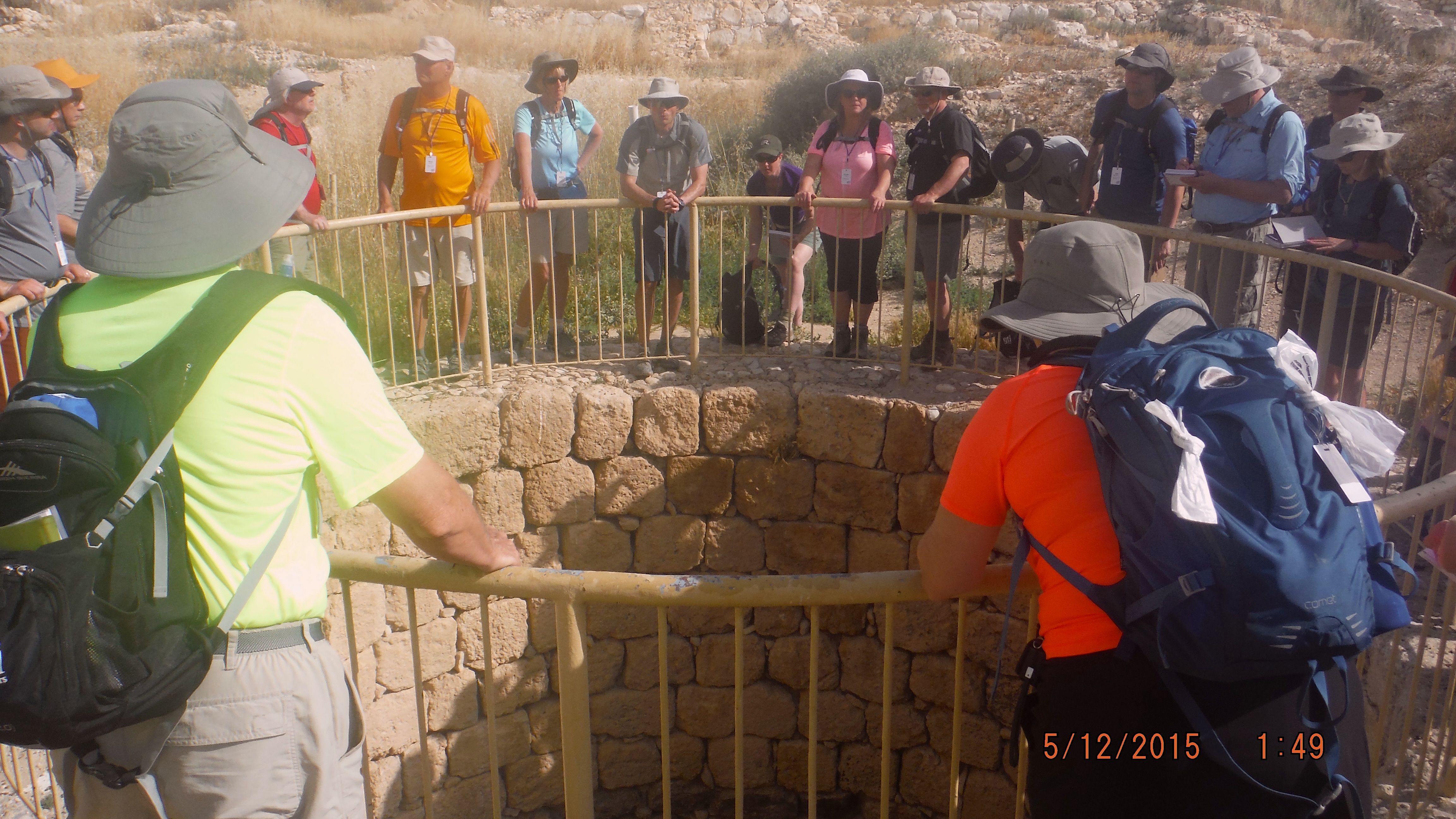
Standing beside or often inside some of these empty cisterns made a specific passage from the Old Testament come to life:
Jeremiah 2:13
“[The Lord declares] my people have committed two evils:
they have forsaken me, the fountain of living waters,
and hewed out cisterns for themselves, broken cisterns that can hold no water.”
Jeremiah prophesied to the people of Judah. Judah was committing the same sin that had brought destruction upon the kingdom of Israel approximately 100 years before. God hated their idolatrous lifestyles and removed His hand of protection from Israel. He was about to do the same with Judah and Jerusalem.
The prophet highlighted two specific evils that the people in Judah had committed against God. First they had forsaken Him. Second, they had replaced Him with false gods and idols. Yet, to make this picture vivid, Jeremiah takes them to the cistern. He explains that God is an ever-flowing spring of refreshingly cold, pure water. Then Jeremiah describes the nasty, stagnant, putrid water of a broken cistern.
A cistern would fill up during the short season of rain (November-March). As the people would use the water the other 7-8 months of the year, the level of water would decrease. The last few months, they were forced to drink the worst water. However, if your cistern was broken you were in trouble. First, a broken cistern would leak precious water out into the ground. The likelihood of running out was inevitable. Second, a broken cistern would let ground contaminates in. The toxicity was as lethal as thirsting to death. Maintaining the town or village’s cistern was a critical task.
What we allow to fill our lives is what we dispense to others. What’s in Your Cistern?
Today, your life is being filled with something.
As a follower of Jesus, how are you allowing God to fill you?
What are the cracks in your life where the grace of God is being contaminated?
How are you “plastering your cistern walls” to prevent toxic elements from entering your thoughts?
Prayer Point for Today: Ask God to reveal the contents of your cistern and help you identify the cracks.
Check back each day this week for the continuation of this five day study. You can subscribe to my blog by clicking on the link to the right and have these delivered to your email daily.
 Shepherding Well
I enjoyed your writing about the cisterns. This must be from your sermon yesterday. Thanks for sending it to me! Mom